



USDT Card Fees Compared: Tevau, Bybit, Nexo
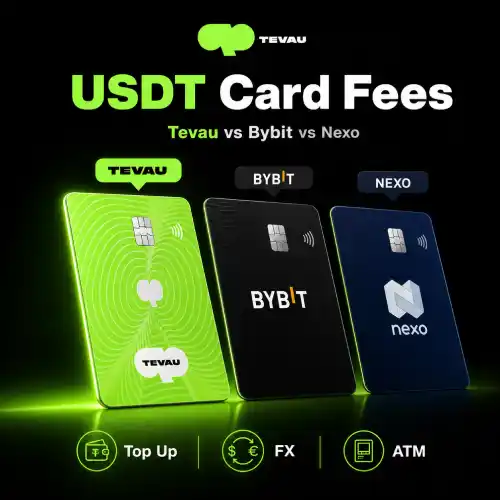
Choosing the wrong crypto card can cost you more than you expect in hidden fees. USDT — short for Tether, a stablecoin pegged 1:1 to the US dollar — has become a popular way to spend crypto without worrying about price swings. But how much you actually pay to use a USDT card depends heavily on the provider. This guide compares USDT card fees across three platforms — Tevau, Bybit, and Nexo — covering top-up fees, foreign exchange fees, ATM withdrawal costs, and more so you can make an informed choice.
Why USDT Card Fees Matter More Than You Think
Many crypto card users focus on whether a card works on the Visa network but overlook the fees that quietly reduce their USDT balance. A card with no monthly fee can still cost you significantly through high FX rates or ATM withdrawal charges. Over time, these small costs add up — especially if you travel frequently or make international purchases.
Understanding the full fee structure — card activation, top-up fee, transaction fee, and foreign exchange fee — gives you a clearer picture of the real cost of spending your stablecoin holdings. Our Tevau Card Fees Explained article breaks down every line item if you want a deeper look at one provider’s structure.
USDT Card Fees: Tevau vs Bybit vs Nexo
The Tevau USDT card is designed to keep everyday costs low. There is no card issuance fee for the virtual card, and top-up fees from your USDT balance are competitive. The FX rate applied to non-USD transactions is transparent and close to mid-market. ATM withdrawal fees apply per transaction, and there are clearly stated daily and monthly spending limits.
Bybit’s card also runs on the Visa network and supports USDT top-ups. However, Bybit applies a foreign exchange fee on purchases made in currencies other than the card’s base currency. ATM withdrawal limits are tiered and tied to KYC verification level. Card activation is straightforward, but users report that the FX rate can widen during volatile market conditions.
Nexo offers both virtual card and physical card options. Its fee model is linked to your Nexo loyalty tier — the more Nexo tokens you hold, the lower your transaction fee and FX rate. For users without a significant Nexo token balance, standard fees apply, which can include a monthly maintenance charge. ATM withdrawals are capped at lower limits compared to some competitors. You can verify current USDT market data on CoinMarketCap to understand the value you are working with before choosing a card.
Key Fee Categories to Compare
When evaluating USDT card fees, focus on these six areas:
- Card activation fee: Tevau charges no activation fee for the virtual card. Bybit and Nexo may charge for physical card delivery.
- Top-up fee: Tevau applies a low flat rate. Bybit and Nexo rates vary by tier or payment method.
- Foreign exchange fee: This is where costs diverge most. Nexo’s base tier carries a higher FX rate; Tevau keeps this rate transparent and low.
- ATM withdrawal fee: All three charge per ATM transaction. Tevau offers a set number of free withdrawals per month before fees apply.
- Transaction fee: Tevau applies its standard 0.2 USD + 0.5% transaction fee on standard card purchases. Bybit and Nexo may apply small per-transaction charges depending on tier.
- Spending limit: Limits differ by KYC level across all providers. Higher verification unlocks higher daily and monthly limits.
For a detailed breakdown of how Tevau stacks up against Bybit specifically, read our Tevau vs Bybit Card comparison. You can also visit the Tevau FAQ for answers to common questions about card fees and limits.
Frequently Asked Questions
What is a USDT card top-up fee?
A top-up fee is the cost charged when you load funds onto your crypto card from your USDT balance. Some providers charge a flat percentage, while others offer free top-ups under certain conditions. Tevau applies a competitive flat top-up rate. Always check whether the fee applies to every top-up or only above a certain amount, as this affects how you should structure your card loading habits.
Do USDT cards charge a foreign exchange fee on every purchase?
Yes, most USDT cards apply a foreign exchange fee when you spend in a currency other than the card’s base currency. The FX rate is the exchange rate used to convert from USD to the local currency, and providers often add a markup on top of the mid-market rate. This markup is your real cost for cross-currency spending. Tevau keeps its FX rate transparent, whereas Nexo’s base tier and Bybit’s rate can vary.
Are there ATM withdrawal fees on USDT cards?
All major USDT card providers charge ATM withdrawal fees after a free monthly allowance is used. Tevau offers a set number of free ATM withdrawals per month, then applies a flat fee per withdrawal beyond that. Bybit and Nexo structure limits by user tier. If you regularly withdraw cash, choose a card with a generous free ATM allowance relative to your expected monthly usage.
Is there a difference between virtual card and physical card fees?
Yes. Virtual cards are typically free to issue and activate. Physical card delivery usually involves a one-time issuance or shipping fee. Nexo charges for physical card delivery in some regions. Tevau provides a virtual card at no cost, and the physical card option involves a standard issuance fee. If you primarily spend online or use mobile payments like Apple Pay, a virtual card may be all you need.
How do spending limits affect USDT card usability?
Spending limits define how much you can spend daily and monthly using your card. These limits are tied to your KYC verification level across all three providers. A basic verification level often comes with lower daily limits, while full verification unlocks higher thresholds. If you plan to use your card for large purchases or frequent transactions, completing full KYC verification is recommended regardless of which provider you choose.
Conclusion
USDT card fees vary significantly across Tevau, Bybit, and Nexo, covering top-up fees, FX rates, ATM withdrawal charges, and spending limits. Understanding each fee category helps you avoid unexpected costs and choose the card that fits your actual spending habits. Tevau stands out for transparent pricing, no virtual card activation fee, and a straightforward fee structure that suits both everyday spending and international travel. If you are ready to spend your stablecoin holdings with fewer fees and more clarity, explore the Tevau card and see how it compares for your needs.