



Tevau vs Bybit Card: Which Crypto Card Is Better?
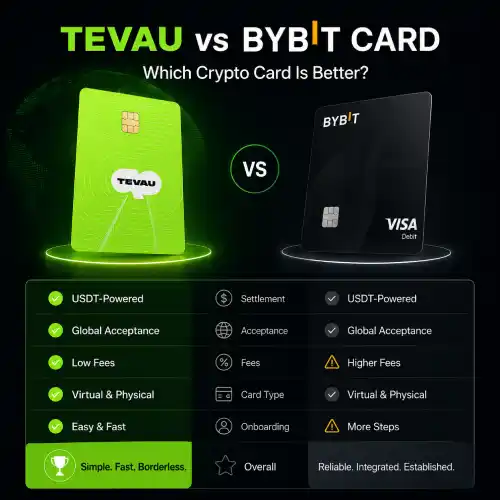
Choosing between two crypto cards can be harder than it looks — especially when the details that matter most are buried in fine print. USDT (Tether), a stablecoin pegged 1:1 to the US dollar, has made it easier than ever to spend crypto without worrying about price swings. Both Tevau and Bybit offer prepaid Visa cards powered by stablecoins, but the experience, fees, and features differ in important ways. This guide breaks down a direct comparison of Tevau vs Bybit Card across fees, card limits, KYC requirements, supported countries, sign-up process, and overall benefits — so you can choose the right option for your lifestyle.
What Are Tevau and Bybit Card?
Tevau is a crypto financial platform built around a USDT-backed Visa card. It lets you load USDT — a stablecoin — onto your card and spend it anywhere Visa is accepted, in local currency. The platform also includes a crypto wallet, earning tools, and stock trading features.
Bybit Card is a prepaid Visa card offered by Bybit, a major centralised crypto exchange. It converts your crypto holdings into fiat at the point of sale. Bybit Card targets existing Bybit exchange users who want to spend their trading balances in everyday life.
Both cards serve similar core purposes, but their target audiences and underlying platforms are quite different. For a detailed look at how Tevau works as a standalone product, the Tevau Card Review 2026 covers the full picture.
Tevau vs Bybit Card: Fees Comparison
Fees are often the deciding factor when choosing a crypto card. Here is how the two cards compare on the most common charges.
- Card issuance fee: Tevau charges a one-time card issuance fee. Bybit Card also charges an issuance fee, though amounts can vary by region and card tier.
- Transaction fees: Tevau applies no foreign transaction fee on standard purchases. Bybit Card has historically applied conversion spreads at the point of sale, which function similarly to a transaction fee.
- ATM withdrawal fees: Both cards charge ATM withdrawal fees after a free tier is exhausted. Tevau offers a monthly free ATM allowance before fees apply.
- Top-up fees: Tevau accepts USDT top-ups with no added spread. Bybit Card converts from your exchange wallet, which may include a conversion fee depending on the asset used.
- Monthly fees: Tevau does not charge a recurring monthly maintenance fee. Bybit Card’s fee structure depends on the card tier selected.
For a full breakdown of Tevau’s pricing, the Tevau Card Fees Explained article lists every charge in plain language.
Overall, Tevau’s fee structure is straightforward and USDT-native, making it easier to predict your actual costs. You can also review common questions about Tevau fees at the Tevau FAQ page.
Card Limits and Supported Countries
Card limits and geographic availability are critical — especially for travellers and those managing larger balances.
Tevau card limits: Tevau sets daily spending and ATM withdrawal limits that scale with your verified account tier. Standard KYC users access solid daily limits suitable for everyday and travel spending. Higher-tier users can access increased limits through further verification.
Bybit card limits: Bybit Card limits are tiered based on KYC level and card type. Basic tiers come with lower monthly spending caps, while higher tiers require additional identity verification to unlock larger limits.
Supported countries: The Tevau USDT card supports users across multiple regions in Asia and beyond, with Visa acceptance at millions of merchants worldwide. Bybit Card availability has expanded over time but remains restricted in certain markets, including the United States, due to regulatory conditions.
If your primary concern is global usability, Visa’s international merchant network — available to both card users — provides broad coverage. However, the key difference lies in which countries each platform can legally onboard new cardholders.
KYC Requirements and Sign-Up Process
Identity verification (KYC) affects how quickly you can get started and how much you can spend.
Tevau KYC: Tevau requires standard KYC for card activation — typically a government-issued ID and a selfie. The sign-up process is handled through the Tevau mobile app and is designed to be completed in minutes. Once verified, your virtual card is available almost immediately. The How to Sign Up for Tevau guide walks through every step.
Bybit KYC: Bybit requires full exchange-level KYC, which is typically more detailed. Because Bybit is a regulated exchange operating across multiple jurisdictions, the verification process may take longer and require additional documentation depending on your country.
For users who want a fast, simple sign-up focused on card spending rather than exchange trading, Tevau’s onboarding is leaner. Bybit’s process is more involved because it ties your card to a full exchange account.
Benefits and Key Differences
Beyond fees and limits, the broader benefits of each card shape the day-to-day experience.
Tevau benefits:
- USDT-native loading — no conversion spread when topping up with stablecoins
- Built-in wallet and earning features within the same platform
- US stock trading with USDT via Tevau Finance
- Apple Pay and Google Pay compatibility
- Transparent, predictable fee structure
Bybit Card benefits:
- Direct integration with Bybit exchange balances — useful for active traders
- Cashback rewards on spending (rates vary by tier)
- Access to multiple crypto assets for card funding, not just USDT
- Established brand with a large global exchange user base
Pros and cons summary: Tevau is the stronger alternative if you want a dedicated, USDT-focused card with a clean platform and predictable costs. Bybit Card suits users already embedded in the Bybit exchange ecosystem who want to spend trading profits directly. If you do not already use Bybit as an exchange, signing up solely for the card adds unnecessary complexity.
Frequently Asked Questions
Is Tevau or Bybit Card better for everyday spending?
For everyday spending, Tevau is generally the more practical choice. It is purpose-built around a USDT Visa card, with no exchange account required and a simple top-up process using stablecoins. Bybit Card works well for existing Bybit traders who want to spend exchange balances, but the full exchange onboarding process adds friction for users who simply want a card for daily purchases at shops and online merchants.
Which card has lower fees — Tevau or Bybit?
Tevau’s fee structure is transparent and USDT-native, meaning no conversion spread when loading with stablecoins. Bybit Card may apply conversion fees depending on which crypto asset you use to fund it, and tier-based monthly fees can apply. For most users spending primarily in USDT, Tevau’s total cost of use tends to be lower and more predictable. Always check each platform’s current fee schedule before applying.
What countries support the Tevau and Bybit cards?
Tevau supports users across Asia and select international regions, with Visa acceptance at millions of global merchants. Bybit Card has expanded its supported countries but faces restrictions in certain markets including the United States. Availability for both cards can change as regulatory conditions evolve in different jurisdictions. Check each platform’s official website for the most current list of eligible countries before signing up.
How long does KYC take for each card?
Tevau’s KYC process is designed to be fast — typically completed within minutes via the mobile app using a government ID and selfie. Your virtual card becomes available shortly after approval. Bybit’s KYC is tied to full exchange account verification, which can take longer and may require more documentation depending on your country of residence. For users who want quick card access, Tevau’s streamlined process is the faster option.
Can I use both Tevau and Bybit Card at the same time?
Yes, there is no rule preventing you from holding both cards simultaneously. Some users choose to use Tevau as their primary everyday spending card for its simplicity and USDT focus, while keeping a Bybit Card as an alternative for spending exchange balances. However, managing two crypto cards means tracking two fee structures, two KYC accounts, and two top-up processes. For most users, one well-chosen card is sufficient for daily needs.
Conclusion
This comparison has covered the key differences between Tevau and Bybit Card across fees, card limits, supported countries, KYC requirements, and overall benefits. Both are legitimate crypto card options built on the Visa network, but they serve different user profiles. Tevau is the cleaner, more focused choice for anyone who wants a USDT-backed everyday spending card without the complexity of a full exchange account. Bybit Card works best for active Bybit traders who want to monetise exchange balances directly. If you want a straightforward, USDT-native card with transparent fees and fast sign-up, explore the Tevau card today and see if it fits your needs.