



Tevau Card Review 2026: Fees, Limits and Is It Worth It?
Managing money across borders has always come with friction — high fees, slow transfers, and limited options for crypto holders. USDT (Tether), a stablecoin pegged 1:1 to the US dollar, has opened a new path: spend your crypto directly, anywhere Visa is accepted. The Tevau card sits at the centre of this shift, turning USDT into everyday purchasing power. This Tevau review covers everything you need to know — fees, card limits, KYC requirements, supported countries, the sign-up process, and whether the Tevau card is genuinely worth it in 2026.
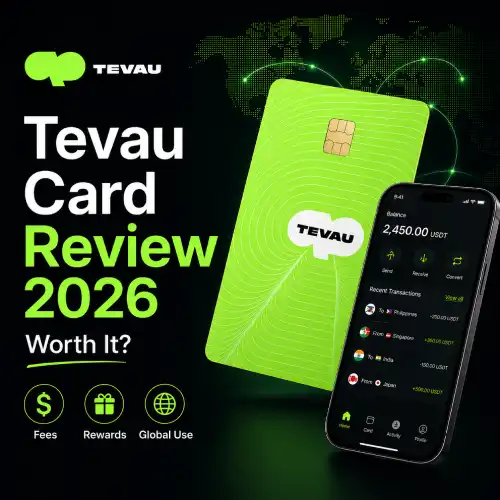
Qu'est-ce que la carte Tevau et comment fonctionne-t-elle ?
La carte Tevau est une carte Visa prépayée alimentée en USDT. Vous la rechargez depuis votre portefeuille Tevau, et la plateforme convertit vos USDT en devise locale au moment du paiement. Aucun portefeuille crypto à gérer : elle fonctionne comme une carte Visa classique, partout dans le monde.
La carte est émise par Tevau et fonctionne sur le réseau Visa, ce qui lui confère une large acceptation internationale. Vous pouvez l'utiliser pour vos achats en magasin, vos achats en ligne et vos retraits aux distributeurs automatiques. Vous pouvez également l'ajouter à Apple Pay pour les paiements sans contact. Guide pour ajouter votre carte Tevau à Apple Pay pour les instructions d'installation.
Le Carte Tevau USDT Elle repose sur un principe simple : votre solde en stablecoin doit être aussi facilement utilisable que de l’argent liquide. Si vous détenez des USDT et souhaitez les utiliser quotidiennement sans conversion préalable en monnaie fiduciaire, cette carte vous simplifie la tâche.
Frais de la carte Tevau : ce que vous paierez réellement
Il est essentiel de bien comprendre les frais avant de souscrire à une carte crypto. Tevau propose une structure tarifaire transparente et relativement simple, contrairement à de nombreuses autres solutions sur le marché.
Les principaux frais à prendre en compte sont les suivants :
- Frais d'émission de la carte : Des frais uniques s'appliquent lors de la commande de votre carte.
- Frais supplémentaires : Un faible pourcentage s'applique lorsque vous chargez des USDT sur la carte.
- Frais de retrait au guichet automatique : Des frais s'appliquent par retrait, avec des limites sur les retraits mensuels gratuits en fonction de votre niveau.
- Frais de transaction à l'étranger : Des frais peuvent s'appliquer pour les paiements effectués dans des devises autres que le dollar américain.
- Frais d'inactivité : Déclenché après une période définie d'inutilisation de la carte.
Pour un détail complet de chaque charge, le Explication des frais de la carte Tevau L'article détaille chaque catégorie de frais. Vous pouvez également consulter le FAQ Tevau pour obtenir rapidement des réponses à vos questions de facturation.
D'après les données de Comparatif des cartes crypto de Forbes Advisor, Les frais des cartes adossées à l'USDT varient considérablement d'un fournisseur à l'autre. La structure tarifaire de Tevau est compétitive, notamment pour les utilisateurs qui effectuent fréquemment de petits achats plutôt que d'importants retraits aux distributeurs automatiques.
Limites de carte, pays pris en charge et exigences KYC
Tevau est présent dans de nombreux pays, notamment en Asie-Pacifique, et étend sa couverture à l'Europe et au Moyen-Orient. La liste des régions couvertes s'allonge régulièrement ; consultez le site web de Tevau pour connaître la disponibilité dans votre pays.
Les limites de la carte comprennent généralement :
- Limite de dépenses quotidiennes : Cela varie selon le niveau de vérification du compte.
- Limite de dépenses mensuelles : Les comptes vérifiés de niveau supérieur bénéficient de limites accrues.
- Limites de retrait aux guichets automatiques : Défini par transaction et par jour.
- Plafond du solde de la carte : Solde maximal en USDT que la carte peut contenir à tout moment.
La vérification KYC (Know Your Customer) est obligatoire pour utiliser la carte Tevau. Cette procédure implique la soumission d'une pièce d'identité officielle et d'un selfie pour confirmation d'identité. Il s'agit d'une pratique courante pour les produits financiers réglementés. Des limites de dépenses et de retrait plus élevées sont débloquées une fois la vérification KYC complète effectuée. La procédure se déroule directement dans l'application et est généralement finalisée en quelques minutes.
Selon Données sur les stablecoins de CoinMarketCap, L'USDT reste le plus grand stablecoin au monde en termes de capitalisation boursière, ce qui fait des cartes basées sur l'USDT comme celles de Tevau un choix pratique pour une grande partie des utilisateurs de cryptomonnaies à l'échelle mondiale.
Processus d'inscription à Tevau : est-ce facile ?
Pour commencer avec Tevau, rien de plus simple. Téléchargez l'application, créez un compte, effectuez la vérification KYC et commandez votre carte, le tout sur une seule et même plateforme. Inutile de vous déplacer en agence ou de gérer plusieurs comptes.
Le processus étape par étape est décrit en détail dans le Guide d'inscription Tevau, qui vous guide à chaque étape, de l'inscription à l'activation de la carte. La plupart des utilisateurs terminent le processus en une seule session.
Une fois votre carte activée, vous la rechargez en envoyant des USDT depuis un portefeuille externe ou depuis le solde de votre portefeuille Tevau. La carte est prête à l'emploi dès que le solde est chargé. Pour accéder aux fonctionnalités de l'application autres que la carte (gestion du portefeuille et outils pour gagner des USDT), consultez le site web. Guide des fonctionnalités du portefeuille et des cartes Tevau donne un aperçu complet.
Avantages de la carte Tevau : ce qui fonctionne bien
Le principal atout de la carte Tevau réside dans sa simplicité. Vous détenez des USDT, un stablecoin indexé sur le dollar américain, et vous les dépensez directement, sans conversion manuelle en monnaie fiduciaire. Cela simplifie considérablement l'utilisation pour les utilisateurs habitués aux cryptomonnaies qui gèrent déjà leur épargne en stablecoins.
Les principaux avantages sont les suivants :
- Acceptation des visas internationaux : Dépensez partout où Visa est acceptée, en ligne ou en magasin.
- Aucun risque de volatilité : L'USDT est indexé sur le dollar américain, votre solde ne fluctue donc pas comme pour le Bitcoin ou l'Ethereum.
- Compatibilité avec Apple Pay : Ajoutez la carte à votre portefeuille numérique pour les paiements sans contact.
- Gestion intégrée à l'application : Rechargez votre compte, suivez vos dépenses et gérez vos limites, le tout depuis l'application Tevau.
- Potentiel de gains : La plateforme offre des fonctionnalités de rendement pour les USDT détenus dans le portefeuille Tevau.
- Structure tarifaire transparente : Les frais sont indiqués clairement à l'avance — aucun frais caché au moment du paiement.
Pour les utilisateurs des régions où les services bancaires traditionnels sont lents, coûteux ou inaccessibles, la possibilité de recevoir des USDT et de les dépenser immédiatement via une carte Visa représente une amélioration pratique significative. Données sur les transferts de fonds de la Banque mondiale, Les coûts des paiements transfrontaliers restent élevés à l'échelle mondiale ; les cartes basées sur les stablecoins offrent une alternative moins coûteuse pour recevoir et dépenser des fonds à l'international.
Avantages et inconvénients de la carte Tevau
Aucun produit n'est parfait pour tous les utilisateurs. Voici un résumé honnête des points forts et des limites de la carte Tevau.
Avantages :
- Dépensez vos USDT directement, sans conversion manuelle en monnaie fiduciaire.
- Le réseau Visa offre une large acceptation mondiale
- Structure tarifaire compétitive pour les clients réguliers
- Application épurée et simple avec une gestion des cartes intuitive
- Apple Pay prend en charge les paiements sans contact
- Le processus KYC est rapide et entièrement intégré à l'application.
Inconvénients :
- Les limites de carte peuvent sembler contraignantes pour les utilisateurs fréquents jusqu'à ce que la procédure KYC complète soit terminée.
- Non disponible dans tous les pays pour le moment — vérifiez la disponibilité dans votre région avant de vous inscrire.
- Les frais de retrait aux guichets automatiques peuvent s'accumuler pour les utilisateurs qui utilisent fréquemment l'argent liquide.
- Seul l'USDT est pris en charge comme devise de financement ; les paiements multi-devises ne sont pas acceptés.
Foire aux questions
La carte Tevau est-elle une carte de crédit ou une carte prépayée ?
La carte Tevau est une carte Visa prépayée, et non une carte de crédit. Vous la rechargez en USDT à l'avance, et vos dépenses sont limitées au solde chargé. Elle ne propose ni facilité de crédit, ni frais d'intérêt, et aucune vérification de solvabilité n'est requise. Ainsi, elle est accessible à un large public, quel que soit son historique de crédit, et vous ne pouvez pas dépasser le montant chargé.
Quels sont les pays couverts par la carte Tevau ?
Tevau prend en charge les utilisateurs dans de nombreuses régions, avec une forte présence en Asie-Pacifique et une disponibilité croissante en Europe et au Moyen-Orient. La liste exacte des pays pris en charge est régulièrement mise à jour au fur et à mesure du développement de la plateforme. Avant de vous inscrire, il est recommandé de consulter le site web officiel de Tevau ou la FAQ pour connaître les pays où Tevau est disponible. Les conditions de livraison et d'utilisation des cartes peuvent varier selon les pays.
Combien de temps dure la vérification KYC sur Tevau ?
La vérification KYC sur Tevau se fait entièrement au sein de l'application et ne prend généralement que quelques minutes. Vous devez fournir une pièce d'identité officielle et un selfie pour confirmer votre identité. La plupart des demandes sont traitées rapidement, mais les délais de vérification peuvent varier en fonction de la qualité des documents et des contrôles de conformité régionaux. Une fois la vérification KYC effectuée, vous bénéficiez de plafonds de carte plus élevés et d'un accès complet aux fonctionnalités de la plateforme ; il est donc conseillé de la réaliser dès le départ.
Des frais sont-ils appliqués pour les dépenses effectuées à l'étranger avec la carte Tevau ?
Oui, des frais de transaction à l'étranger peuvent s'appliquer lorsque vous effectuez des paiements dans une devise autre que le dollar américain. Le taux exact de ces frais est indiqué dans la grille tarifaire publiée par Tevau. Pour les voyageurs internationaux ou les utilisateurs effectuant des paiements dans plusieurs devises, il est important d'en tenir compte lors de votre comparaison des coûts. L'article du blog de Tevau expliquant les frais de la carte présente un récapitulatif détaillé de tous les frais applicables par type de transaction.
Quels sont les plafonds de dépenses journaliers et mensuels de la carte Tevau ?
Les limites de la carte Tevau sont échelonnées selon le niveau de vérification de votre compte. Les comptes de base ont des plafonds de dépenses quotidiens et mensuels plus bas, tandis que les comptes entièrement vérifiés (KYC) bénéficient de limites plus élevées. Les limites de retrait aux distributeurs automatiques sont également fixées par transaction et par jour. Si vous avez besoin de limites plus élevées pour votre activité professionnelle ou pour un usage personnel intensif, il est recommandé de procéder à une vérification complète et de consulter la structure des niveaux de vérification dans l'application Tevau.
Tevau vs RedotPay, KazePay and Pokepay
How does Tevau compare with other crypto cards? See our side-by-side comparisons: RedotPay vs Tevau, KazePay vs Tevau et Pokepay vs Tevau.
Conclusion
Cet avis sur la carte Tevau a abordé les points essentiels : frais, limites de la carte, exigences KYC, pays pris en charge, procédure d’inscription et avantages et inconvénients concrets de l’utilisation d’une carte Visa prépayée adossée à l’USDT en 2026. Tevau offre une solution simple et pratique pour tous ceux qui détiennent des USDT et souhaitent les dépenser comme de l’argent liquide, sans conversion manuelle ni recours à plusieurs plateformes. La structure des frais est transparente, l’inscription est simple et le réseau Visa garantit une large acceptation. Si vous êtes prêt à faire fructifier votre solde en stablecoin, découvrez Tevau. Carte Tevau et voyez si cela correspond à vos besoins financiers.