


Best Crypto Card for Asia Users 2026
Finding a reliable crypto card in Asia can be frustrating — many platforms do not support the region, restrict access by country, or charge hidden fees that quietly erode your balance. USDT (Tether), the world’s most widely used stablecoin — a cryptocurrency pegged to the US dollar — has made it easier for users across Asia to hold and spend digital assets without worrying about price volatility. Crypto adoption across Japan, Malaysia, Hong Kong, Singapore, the Philippines, and wider Southeast Asia is accelerating fast, and demand for practical, everyday spending tools is rising with it. This guide covers how crypto cards work in Asia, what to look for when choosing one, and how Tevau meets the needs of Asian users in 2026.
Are Crypto Cards Available in Asia?
Yes — crypto cards are available across Asia, but availability varies significantly between providers and countries. Some platforms only support a handful of markets. Others restrict access based on nationality, residency, or local regulatory requirements. Across the region, digital asset frameworks differ: Japan’s FSA, Singapore’s MAS, Hong Kong’s SFC, and Malaysia’s Securities Commission all operate under different rules — so it is important to use a platform that is compliant across the markets you operate in.
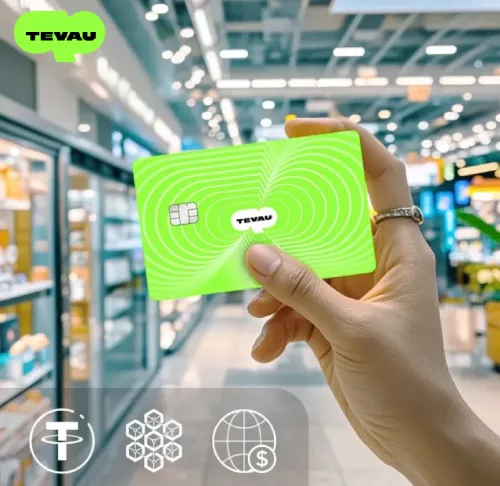
Tevau is a USDT-backed Visa card that is available to users across Asia. It allows you to load your card with USDT and spend it anywhere Visa is accepted — online or in-store, locally or internationally. You can check eligibility and get started directly from the Tevau card page.
Crypto adoption in Asia has grown faster than any other region in the world. According to data from CoinMarketCap, USDT remains the most traded stablecoin globally — and Asian markets account for a significant share of stablecoin usage for both savings and everyday payments.
What to Look for in a Crypto Card for Asian Users
Not every crypto card is built the same. When comparing options for the Asian market, there are several key factors to consider before committing to a platform.
- Supported countries and eligibility: Confirm the card explicitly supports your country. Some providers restrict access by nationality or residency — a platform that works in Singapore may not work in Indonesia or Japan.
- Visa or Mastercard network: A card on the Visa global network gives you broad acceptance — from local street markets that accept card payments to international online stores and ATMs across Asia.
- Fees and FX charges: Look at top-up fees, transaction fees, and foreign exchange margins. These costs add up quickly if you spend frequently or move money across currencies. The Tevau Card Fees Explained article breaks down exactly what you will pay.
- Stablecoin support: Cards that support USDT reduce your exposure to crypto volatility. Your balance stays stable even when Bitcoin or Ethereum swings.
- Mobile app and usability: A clean, reliable app matters for day-to-day spending across multiple currencies and countries. Tevau’s 2026 app update introduced a refreshed interface designed for ease of use across Asian markets.
If you want a side-by-side look at how Tevau compares with another major option, the Tevau vs Crypto.com Card comparison covers fees, features, and availability in detail.
How Tevau Works for Asian Users
Tevau is designed to bridge the gap between your crypto holdings and everyday spending — wherever you are in Asia. The process is straightforward regardless of which country you are based in.
First, you create your Tevau account and complete identity verification. Once approved, you deposit USDT into your Tevau wallet. When you make a purchase, Tevau converts your USDT to the local currency in real time at the point of sale — whether that is Japanese Yen, Hong Kong Dollars, Malaysian Ringgit, Philippine Pesos, or any other currency in Visa’s network. You do not need to manually convert funds before spending.
This makes Tevau equally useful for local daily spending and cross-border transactions across Asia. Whether you are paying at a retailer in your home country, travelling regionally, or shopping on international platforms, the card handles currency conversion automatically. For more detail on how this works, see the guide on how Tevau pays in local currency.
Tevau also supports Apple Pay and Google Pay, so you can tap to pay with your phone at contactless terminals across the region. ATM withdrawals are supported too, giving you access to local cash whenever you need it.
Crypto Adoption Across Asia — The Regional Context
Asia leads the world in cryptocurrency adoption, with markets ranging from Japan’s mature and highly regulated crypto economy to the fast-growing retail crypto scenes of Southeast Asia. Regulatory frameworks vary by country — Japan’s FSA has licensed crypto exchanges since 2017, Singapore’s MAS has built one of the world’s most comprehensive digital asset frameworks, and Hong Kong has moved to embrace regulated crypto services for retail users since 2023.
According to Statista, Southeast Asia ranks among the world’s fastest-growing regions for cryptocurrency ownership, with countries like the Philippines, Vietnam, and Malaysia consistently ranking in the top tiers of global crypto adoption indices.
For Asian users already holding USDT on exchanges, a crypto card like Tevau offers a practical way to put those holdings to work — without needing to cash out to a local bank account first, and without being restricted to a single country’s payment infrastructure. You can also visit the Tevau FAQ for answers to common questions about how the card works across specific countries in Asia.
Frequently Asked Questions
Is the Tevau crypto card available across Asia?
Yes, Tevau is available to users across Asia, including markets in Southeast Asia, East Asia, and beyond. You can sign up, complete verification, and receive your virtual or physical Visa card. The card works anywhere Visa is accepted — local merchants, international platforms, and ATMs across the region. Eligibility is confirmed during the onboarding process. Check the Tevau card page for the latest supported country list and any regional requirements that may apply to your specific country.
What currency does a crypto card charge in Asia?
When you spend with a USDT-backed crypto card in Asia, your transaction is settled in the local currency of the country where you are spending — Japanese Yen in Japan, Hong Kong Dollars in Hong Kong, Malaysian Ringgit in Malaysia, and so on. Tevau converts your USDT balance to the relevant local currency automatically at the point of sale. The exchange rate used is based on real-time market rates, and a small conversion fee may apply. You do not need to pre-convert your USDT before making a purchase.
Are crypto cards legal in Asia?
The legal status of crypto cards varies by country across Asia. Japan, Singapore, and Hong Kong have established regulatory frameworks that explicitly cover digital asset services. In most Asian markets, holding and spending stablecoins like USDT is not prohibited for individuals, but using a compliant platform is important. Tevau operates as a regulated crypto card provider. Always ensure the platform you choose follows applicable local and international compliance standards for your country of residence.
What fees should I expect with a crypto card in Asia?
Fees vary by provider. Common charges include card issuance fees, monthly maintenance fees, top-up fees, foreign transaction fees, and ATM withdrawal fees. Some cards also charge a currency conversion spread on top of the interbank rate. Tevau publishes a transparent fee schedule so you can compare costs before signing up. For Asian users transacting across multiple currencies and countries, it is worth reviewing the full fee breakdown to understand what each transaction will cost you in practice.
Can I withdraw local currency from an ATM across Asia using a crypto card?
Yes, Tevau supports ATM withdrawals. If your card is loaded with USDT and you use a Visa-compatible ATM anywhere in Asia, the card will convert your USDT to the local currency and dispense the cash. ATM fees and daily withdrawal limits apply. This feature is particularly useful for travellers moving between Asian countries — you can access local cash in each country without carrying multiple currencies or using expensive airport exchange counters.
Conclusion
Asia is the world’s most active region for crypto adoption — with diverse markets, progressive regulatory frameworks, and a population already comfortable with mobile-first financial tools. A USDT-backed Visa card gives you the flexibility to spend your crypto holdings in everyday life across the region, without the complexity of manual conversion or country-by-country account setups. The key is choosing a card that is genuinely available across Asia, transparent about fees, and built for reliable daily use. If you are ready to put your USDT to work, apply for the Tevau USDT card and start spending your crypto wherever Visa is accepted.