


What Is USDT? A Beginner’s Guide for Crypto Card Users
Managing money across borders is frustrating — exchange rates shift, fees pile up, and crypto volatility makes budgeting harder. USDT, short for Tether, is a stablecoin — a type of cryptocurrency designed to maintain a consistent value of $1 USD. Unlike Bitcoin or Ethereum, USDT does not fluctuate wildly with the market, making it far more practical for everyday use. This guide explains what USDT is, how it works, and how crypto card users can spend their USDT balance in the real world without the usual friction.
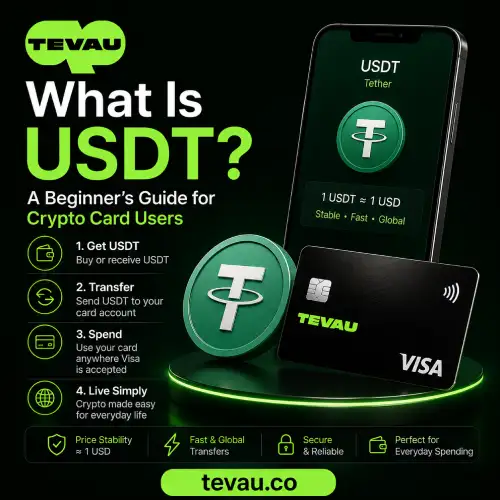
What Is USDT and How Does It Work?
USDT stands for Tether USD. It is a stablecoin — a digital currency pegged 1:1 to the US dollar. For every USDT in circulation, Tether Limited claims to hold an equivalent amount in reserves. You can verify USDT’s market data and supply on CoinMarketCap.
Because USDT holds a stable value, it removes the price risk that makes other cryptocurrencies difficult to use for payments. You always know what $100 USDT is worth: $100. That predictability is what makes it useful for spending, saving, and transferring value internationally.
USDT runs on multiple blockchains including Ethereum, Tron, and Solana. This flexibility means low transaction fees and fast transfers depending on the network you choose.
Why Crypto Card Users Choose USDT
If you hold a crypto card, USDT is the most practical asset to use as your spending balance. Volatile assets like Bitcoin can lose value between the time you load your card and the time you spend. With USDT, your balance stays stable.
Itu Kartu USDT Tevau lets you load USDT directly and spend it anywhere on the Visa network. That means millions of merchants globally accept your crypto balance without you converting to local currency manually. The FX rate is applied at the point of sale automatically.
You can also use your card for ATM withdrawal, online purchases, and contactless payments. The card is available as both a virtual card for immediate use and a physical card for in-person spending. For a full breakdown of fees including top-up fee and transaction fee structures, visit the Penjelasan Biaya Kartu Tevau memandu.
Foreign exchange fee and spending limit details vary by card tier — check the Tanya Jawab Umum Tevau for current figures.
How to Start Using USDT With a Crypto Card
Getting started is straightforward. First, you need a USDT balance — you can purchase USDT on any major crypto exchange. Then you load it onto your card. Learn the exact steps in our guide on how to load USDT onto your Tevau card.
Card activation is quick once your account is verified. After activation, your USDT balance is ready to spend. The Visa network handles currency conversion wherever you are, so you can use your card in Japan, Singapore, Europe, or anywhere Visa is accepted.
One important note: USDT is not legal tender and its value depends on Tether’s reserve backing. Always understand the asset before you use it. You can read Tether’s transparency reports and independent analysis at Visa’s official site for card acceptance information.
Pertanyaan yang Sering Diajukan
Is USDT the same as US dollars?
USDT is not the same as US dollars, but it is designed to maintain a 1:1 value with the USD. USDT is a stablecoin issued by Tether Limited and exists on a blockchain. It is not government-issued currency. However, for practical purposes, 1 USDT typically equals $1 in spending power when used through a crypto card on the Visa network.
Can I use USDT to pay at normal shops and restaurants?
Yes — but you need a USDT-backed card to do so. You cannot hand a merchant USDT directly. A crypto card like the Tevau card converts your USDT balance at the point of sale using the current FX rate, so the merchant receives local currency and you spend from your USDT balance. This works anywhere Visa is accepted globally.
What fees are involved when spending USDT with a card?
Common fees include a top-up fee when loading USDT onto your card, a transaction fee per purchase, and a foreign exchange fee when spending in a currency other than USD. ATM withdrawal fees may also apply. Fee structures vary by card tier. Always review the full fee schedule before card activation to avoid surprises.
Is USDT safe to hold and use?
USDT carries different risks than cash or bank deposits. Its value depends on Tether’s reserves remaining fully backed. It is also subject to blockchain network risks. That said, USDT is the world’s most widely used stablecoin by volume. For everyday spending through a regulated card platform, many users find it a practical and low-volatility option compared to other cryptocurrencies.
What is the difference between a virtual card and a physical card for USDT spending?
A virtual card is a digital card number issued immediately after card activation. It works for online purchases and can be added to digital wallets. A physical card is a traditional plastic Visa card used for in-person payments and ATM withdrawal. Some platforms offer both. The Tevau USDT card is available in both formats, giving you flexibility for different spending scenarios.
Kesimpulan
USDT is a stablecoin pegged to the US dollar, offering the portability of crypto without the price volatility. This guide covered what USDT is, why it suits crypto card users, and how to start spending it through a Visa-enabled card. Stablecoins like USDT make it practical to hold and use digital assets for real-world purchases, travel, and cross-border payments. If you are ready to put your USDT balance to work, explore the Kartu Tevau and see how simple it is to spend crypto anywhere Visa is accepted.